
The Debate Over Political Representation
The Social ContractThis flow traces Rousseau’s conflict with representation, from the people’s direct sovereign role to the practical constraints of large modern states.
increasing Bearing strength in each event
 decreasing
Bearing strength in each eventdecreasingWill Cannot Be Delegated

Will Cannot Be Delegated
Power and Will Separated
Rousseau permits the transmission of executive power but denies that the people can transfer its sovereign will. A representative may act, but cannot become the people’s will.
The Principle Established
This distinction makes direct popular sovereignty a defining test of legitimacy. Representation becomes the central institutional challenge of the theory.
Representatives as Stewards

Representatives as Stewards
No Final Authority
Deputies may carry out a commission, but cannot make definitive laws without popular ratification. The people remains the lawgiver.
England as Warning
Rousseau claims the English people is free only during elections, after which it returns to political dependence. Representation risks reducing sovereignty to a brief ritual.
Citizens Withdraw from Service

Citizens Withdraw from Service
Public Work Purchased
Citizens who pay for substitutes in war and deliberation detach themselves from the common cause. Money makes public service seem replaceable.
Dependence Deepens
Rousseau warns that soldiers may enslave the country and representatives may sell it. Withdrawal enables institutions to act without active popular oversight.
Scale Raises a Practical Objection
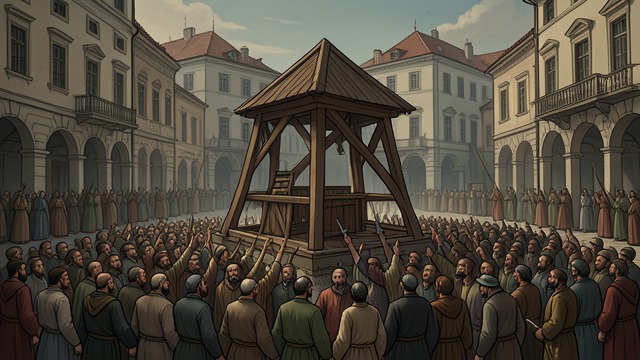
Scale Raises a Practical Objection
The Modern Constraint
Large populations and distances make constant assemblies difficult. Rousseau recognizes that ancient direct participation cannot simply be transplanted everywhere.
A Limited Answer
He sees small cities as the clearest setting for sovereignty and gestures toward a future account of confederation that could combine scale with local self-rule.
Local Participation Envisioned
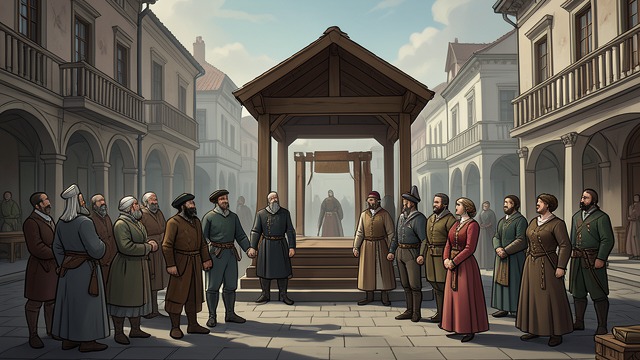
Local Participation Envisioned
Authority Without Subjection
Rousseau rejects making one town subordinate to another. He proposes distributing public life and assembling provincial bodies in different places.
The Unfinished Solution
The proposal seeks to resist centralization while keeping popular authority active. It reveals the tension between his principles and the administrative demands of large states.
Book II, Chapter I
Book III, Chapter XV
Book III, Chapter XV, as money replaces personal public duty
Book III, Chapter XV, at the question of large modern states
Book III, Chapters XIII–XV, in the proposal for multiple towns
